“If our superpower is money, then we need to get as much money to those organizations that we feel are positioned to defend and protect civil society.” Dr. Carmen Rojas of the Marguerite Casey Foundation talks about leading through uncertainty, protecting nonprofits through the foundation’s major expansion in grantmaking, and fighting for a government that benefits all of us.
Dr. Carmen Rojas is the president and CEO of the Marguerite Casey Foundation. Prior to joining the foundation, she was the co-founder and former CEO of The Workers Lab, an innovation lab that invests in entrepreneurs, community organizers, and government leaders to create replicable and revenue-generating solutions that improve conditions for low-wage workers. For more than 20 years, Carmen has worked with foundations, financial institutions, and nonprofits to improve the lives of working people across the United States.
BACK TO EPISODES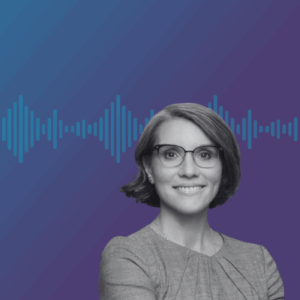
Transcript
Note: This episode of The Measure Podcast was recorded before President Trump signed the “One Big Beautiful Bill Act” on July 4, 2025.
Carmen Rojas:
I think we have forgotten that: that we thought these things, these hard-fought victories, were organic features of what it means to be governed. And they are not. They are the result of struggle. They are because people fought. They are because people died in this country for my parents to have a good life and to give me a good life.
Leon T. Andrews, Jr.:
Welcome to The Measure, a podcast from Equal Measure. I am your host, Leon Andrews, president and CEO. At Equal Measure, we partner with foundations, nonprofits, and public institutions to advance social justice through learning, measurement, evaluation, and strategy. This podcast is where we talk with bold leaders who are transforming systems, centering equity, and fighting for just communities— especially in a time when so much progress is being tested.
I am honored to be joined today by Dr. Carmen Rojas, president and CEO of Marguerite Casey Foundation. Carmen has spent over 20 years fighting for working people and building multiracial movements, from founding The Workers Lab, to her powerful leadership at the Foundation, particularly during a time of national reckoning. She’s been a force in shifting philanthropy toward justice.
Carmen, thank you for being with us today.
Carmen Rojas:
Thank you so much for having me, Leon.
Leon T. Andrews, Jr.:
I’m looking forward to our conversation and I’d like to start because you’ve been at the Foundation now for five years. I know that might feel like yesterday in some cases and even 20 years if you think about all that’s happened. And, so, when you came amid of the global pandemic and the national uprising for Black lives, can you reflect on those five years? What’s something you know now that you wish you had known then?
Carmen Rojas:
Funny, tomorrow is my fifth-year anniversary. We were just having a staff call and it was mentioned. I was like, oh, my gosh. It’s like that feeling of, has it been five years already? And man, has it been five years. The confluence of both of those feelings hit me. I’ve always been very clear that our greatest gift is to move the most money to those folks whose work best aligns with our mission and to free those people up to change the world. I never saw this job as a reflection of my legacy or as some platform for me to exercise my own vision of the world. I saw it as a supporting role.
When I look back at the feeling that I had when I started, we were a couple of months into the pandemic, and I was really afraid. I was just really afraid. I’d just gotten this job that I was really excited about, that felt super powerful at an institution with a really important legacy. And I was afraid, and afraid to be afraid. And I think in this moment, the greatest turn in my leadership over the last five years is to be super honest about how I feel in a moment. So, then as in now, I was really afraid of all of the uncertainty. I was afraid of all the—sort of the casualty. I was afraid that I had undue power and influence because of the job that I had and felt an inordinate amount of responsibility to help keep people alive.
Instead of trying to banish or hide or freeze my fear, I’m just kind of visiting with it and being very public that I am afraid of this moment that we’re in. And that I am also clear that to be courageous is not to not have fear, but it’s to act even in the face of fear. And, so, my greatest reflection has been to be honest about the gift of being able to learn and be a human being who’s a leader in public.
Leon T. Andrews, Jr.:
So very powerful. So, a lot of nuggets. And, so, I’m wondering, as you’re thinking about the five years and thinking about your time in philanthropy, has that reshaped what you believe philanthropy is capable of?
Carmen Rojas:
It has right-sized it. And this moment has right-sized it, right? So, as we talk about budget reconciliation, what this administration is proposing is to cut $400 billion and $700 billion from Medicaid and SNAP. There’s nothing more humbling than more zeros than your zeros. And there’s no amount of philanthropy, no amount of charity, no amount of individual well-being that can take the place of a federal government committed to people living good lives, committed to diversity, equity, and inclusion, committed to delivering on the promise, on the set of promises that were hard fought and won by people over generations that believed that everybody in this country deserved a safety net. That everybody in this country deserved dignity at work and at school. That everybody in this country deserved a fair shot. And right now those are all being contested. There’s no amount of philanthropy that can take the place of that.
And, so, while some institutions may want to have a smaller government, at Marguerite Casey we see it as our job to fight for a government that works for all of us. And we want to fund the kind of organizing that plants a seed in people’s imagination, that the government should be the thing that makes their lives better—not worse, not poor, not more exploited, but better. That because of the government, they have access to quality healthcare. Because of the government, they have access to public education, to public parks, to public libraries.
Across party, I think we’ve done a really bad job in this country to name the amazing things that our government has done. Which is not to say to let it off the hook, right? There are so many ways in which our government has left us wanting for more. But if you live in a rural community and the only way you get mail or information is by the United States Postal Service, bet. If you’re a poor person and you don’t have a jet or an airplane or a way to get to a special island, but the place you go on vacation with your kids is a national park, bet. That’s our government. That’s us. That’s the promise that me and you make to each other, that we all make to each other, that we believe that we can give up a little bit of ourselves for all of us to have a good life.
And, so, I think it’s just, there’s no amount of philanthropy that can take that role. I think we have a unique job in philanthropy, which is to create the conditions to make that visible.
Leon T. Andrews, Jr.:
Thank you. And you made some reference about your own journey, but I’d love for you to think about a place and what has meant to you in your life, where that history and context of place has fundamentally shaped who you are and how you lead. And, so, I’d love it for our audience to hear that context for you.
Carmen Rojas:
That’s my house growing up. My parents are immigrants. My dad is from a small island off the coast of Venezuela, and my mom is from a small town in Nicaragua. They immigrated in their late teens, early 20s, met in San Francisco in a different San Francisco than today. And my dad and mom immigrated at a time in which the buds of the civil rights movement, of mass unionization, the labor rights movement was starting to deliver. It was like blossoming and pollinating our country. My parents benefited for that.
My mom got a job cleaning office buildings and was offered a job working at a bank in downtown San Francisco, and as an entry-level employee, was offered a no-interest loan to buy her first house in San Francisco. A person without a high school diploma, who did not speak English, who worked hard and wanted more, had that. Because generations of people before her here fought for her here. My dad washed dishes at restaurants in San Francisco’s Mission District. My parents’ ability to buy a home, have health insurance, have protection at their jobs meant there was a whole entire universe that was open to me.
I now say I was Latina middle class, which is different than white people middle class, but it was middle class nonetheless. My parents could take me on vacation. I could see the dentist. I could go to the doctors. We had insurance. And that was so transformative. And to watch in my lifetime the conditions in our country transformed so radically—so that, instead of somebody being able to come here, get a good job and care for their family—we have, one, criminalized those people; two, normalized people sleeping on the street who work.
I always come back to Angela Davis’s Freedom is a Constant Struggle. I think we have forgotten that: we thought these things, these hard-fought victories were organic features of what it means to be governed. And they are not. They are the result of struggle. They are because people fought. They are because people died in this country for my parents to have a good life and to give me a good life. That place has made it so that I believe it’s incumbent on me to continue to fight for those conditions.
Leon T. Andrews, Jr.:
Yeah. Thank you so much for sharing about how place in your life and the history and context really has shaped who you are, your leadership. And how would you say that shows up for you today in your own leadership?
Carmen Rojas:
Gosh. So many ways. One is that I don’t focus on the near-term victory. To win a policy feels short-sighted. One of the things about the last 10 years that is really difficult for many of us to be honest about is that the majority of people in this country have been suffering for a long time. 70% of people in this country live paycheck to paycheck. And there’s the thing about saying the numbers about that, like, what does it mean to live paycheck to paycheck? But I’ll just tell you as somebody who in my 20s and early 30s lived paycheck to paycheck, that shit’s stressful. I sort of anchor on to my parents’ time here, their immigration story here, mostly because it wasn’t always that way. And I feel like that something more was seeded in me as something to deliver upon.
Leon T. Andrews, Jr.:
Yeah, I appreciate—we share an immigrant story, so I just wanted to just acknowledge a lot what you say resonates. Obviously from my immigrant story as a first-generation here. Both of my parents are from Guyana in the Caribbean and South America. Just appreciate you taking a moment to just helping contextualize why context matters, why place matters, why our history matters, and how we lead and how we think about power. That’s so important in doing this work. So, thank you for doing that.
And I want to talk more about your leadership, particularly at the Foundation. In April, the Marguerite Casey Foundation announced a bold move to triple its grantmaking, initially $25 million a year to $130 million in a year, marked by political attacks on justice movements. Can you share what it took internally and externally to make that decision?
Carmen Rojas:
We have been preparing for this political moment for about 18 months. So, in January of 2024, our leadership team started just to have a very honest conversation about how fast politics can change. And, so, in February, and for most of 2024 as an organization, we spent time saying, OK, we have one major contribution to the world, and it’s money. That’s the thing that we can do. At our best, we move the most money possible with the greatest ease to those organizations and leaders that best align with our mission. There’s no amount of wordsmithing around that. Sometimes people are like, it’s convening power, it’s research. No. People, they don’t care about my convening. They care about my convening because there’s money. Let’s all just be honest about that.
And, so, we spent 2024 asking, if we are going to meet the moment, what is the best way for us to do that? How are we best of service right now? And it was by increasing our payout five times. If our superpower is money, then we need to get as much money to those organizations that we feel our position to defend and protect civil society.
Leon T. Andrews, Jr.:
And you’ve consistently invested in multiracial movements over your career, from worker-centered coalitions, from your time at The Workers Lab to your leadership as you’re talking about today. But we know that movements are fragile, under-resourced and often under attack, particularly as we look at what’s happened over the last five years. So, what are we still getting wrong about how we fund and sustain movement infrastructure?
Carmen Rojas:
Oh. Scale of funding. It’s actually giving people money like you want them to win. One of the reasons we fund community organizing the way we do. So, we fund organizations at 25% of their budget for up to five years. It’s not a forever commitment, but it’s a good time commitment. It’s a half a decade commitment. And we frontload that money because we want people, leaders of those organizations, not to be worried about where they’re going to get that 25% of their operating expenses. And any money above that they raise, amazing, fantastic. So, fund like we want to win.
I think in this moment, there is a real question about community organizing. And I think we have become a sector that imagines our staff to be the protagonists of the fight as opposed to the people being the protagonists of the fight. There’s a confusion. Which doesn’t mean that staff of nonprofit organizations and foundations don’t bring meaningful and powerful experiences to their roles, but it does mean we have to make a clear distinction between caring for ourselves within these institutions, and only serving our individual needs within these institutions, and actually having a project of serving the masses, the majority of people in this country.
Leon T. Andrews, Jr.:
As I think about the moment we’re in from an Equal Measure perspective, I feel like we are living in a defining moment where learning, equity, and data are not only under attack across philanthropy, government, education, but also urgently needed more than ever. We’re seeing a renewed call by funders and system leaders for equity-centered learning and evaluation. So, I’m wondering, in your view, is there a place where you think philanthropy can reclaim the learning, measurement, evaluation—not as bureaucratic tools, but as radical instruments of liberation, of liberation and accountability to the communities that they’re intended to serve?
Carmen Rojas:
Yeah. Yes. And I will say to come full circle to the beginning of our conversation, I think it’s our government’s job. When the government erases data on race, on gender, on history, it’s an attack on our communities. It’s attack on the most vulnerable people in our communities. And I think that there are ways in which we can support organizations and leaders now to be truth-keepers of that data. I’ve been so inspired to see people download and create alternative data places, and at some point it has to go back. I just don’t think that in private hands—and we are private institutions—I don’t have examples that in private institutions, this information will not be weaponized. And, unfortunately, in this moment, it’s a bit of a conundrum because in public institutions I don’t have evidence that this data won’t be weaponized against our communities.
I think this is where community organizing can be the most powerful: to create common spaces of common information, where the commons holds our histories, our information, our stories. I think that philanthropy should keep funding organizing that creates more of the commons, and that keeps putting pressure on government to hold and keep that information.
Leon T. Andrews, Jr.:
Yeah, we appreciate that and we struggle with the assumption that government should be playing that role, and we are now seeing what the impacts are when they’re not. And is there a need to revisit some kind of hybrid, where it’s not sitting in one place and where does that live? So, it’s a question that we’re still wrestling with, so I appreciate you reflecting on it.
This is such a rich conversation. And as I think about the conversation and I think about knowing we’re living in these times, as we’re reflecting about leaders across the social sector, how they’re navigating through these difficult times, whether it’s the backlash or the burnout or broken systems, there could be places where people could be losing hope. What gives you hope right now, and how do you stay rooted in that hope when it gets hard?
Carmen Rojas:
Yeah. Well, before we end I want to say thank you for having me, Leon, this has been such a treat.
Leon T. Andrews, Jr.:
My pleasure.
Carmen Rojas:
I’ve been really proud of philanthropy. I’m just not going to lie. It has been so amazing to see how front-footed leaders have been in our sector to protect people’s freedom of speech, freedom of assembly, due process, the freedom to give to the organizations that serve our communities. Hundreds of my peers have preemptively coordinated and called out the overreach and the threats by this administration, and that’s unprecedented. And that gives me so much hope, to know that it’s not me alone, it’s not Marguerite Casey alone, but that it’s hundreds of us that have been like, all right, great. That’s what you want to do. We’re going to say it out loud, and we’re going to fight to defend these rights—these promises—that we’ve made to each other.
In terms of our grant recipients or work out in the world, I’m always thinking about the Tennessee Immigrants Refugee and Rights Coalition. I think the South is often written off. We write off places like Tennessee as places that are impossible to change, intractable. And this year, TIRRC, in a coalition with a number of other organizations, fought to defend public education in the state. The state was fighting to make it illegal for public schools to serve undocumented immigrant students in the state. And TIRRC was able to build a multiracial, cross-class coalition to fulfill this promise: that kids in our country have access to quality education regardless of their immigration status—that they should not have to pay for that, that the schools should not have to check for people’s immigration status at the door. That that is a promise that we’ve made.
In Tennessee, for me, that is a beacon of light for the rest of the country. That it is an example today, in the last couple of months, that people come together and fight for a better future. And sometimes we win, and we have to rest on the laurels of those victories as long as we can as we continue this fight.
Leon T. Andrews, Jr.:
I think it’s so important, Carmen, that you said that as we’re wrapping up our conversation, that foundations are fighting, right? That there are those that are on the ground, rolling up their sleeves, and there still is this commitment. Carmen, thank you. Thank you for sharing your insights, your courage, your unwavering commitment to justice, particularly at a time when equity work is facing both resistance and renewed urgency. Your voice reminds me, reminds us, of what’s possible when philanthropy leads with boldness and with heart.
I’d like to leave you with a quote inspired by my conversation with Carmen. It’s from the late Ella Baker: “Give light and people will find the way.”
Thanks for listening to The Measure. Be sure to rate, comment, and subscribe to the podcast. Learn more about Equal Measure by visiting our website, equalmeasure.org. Until next time.